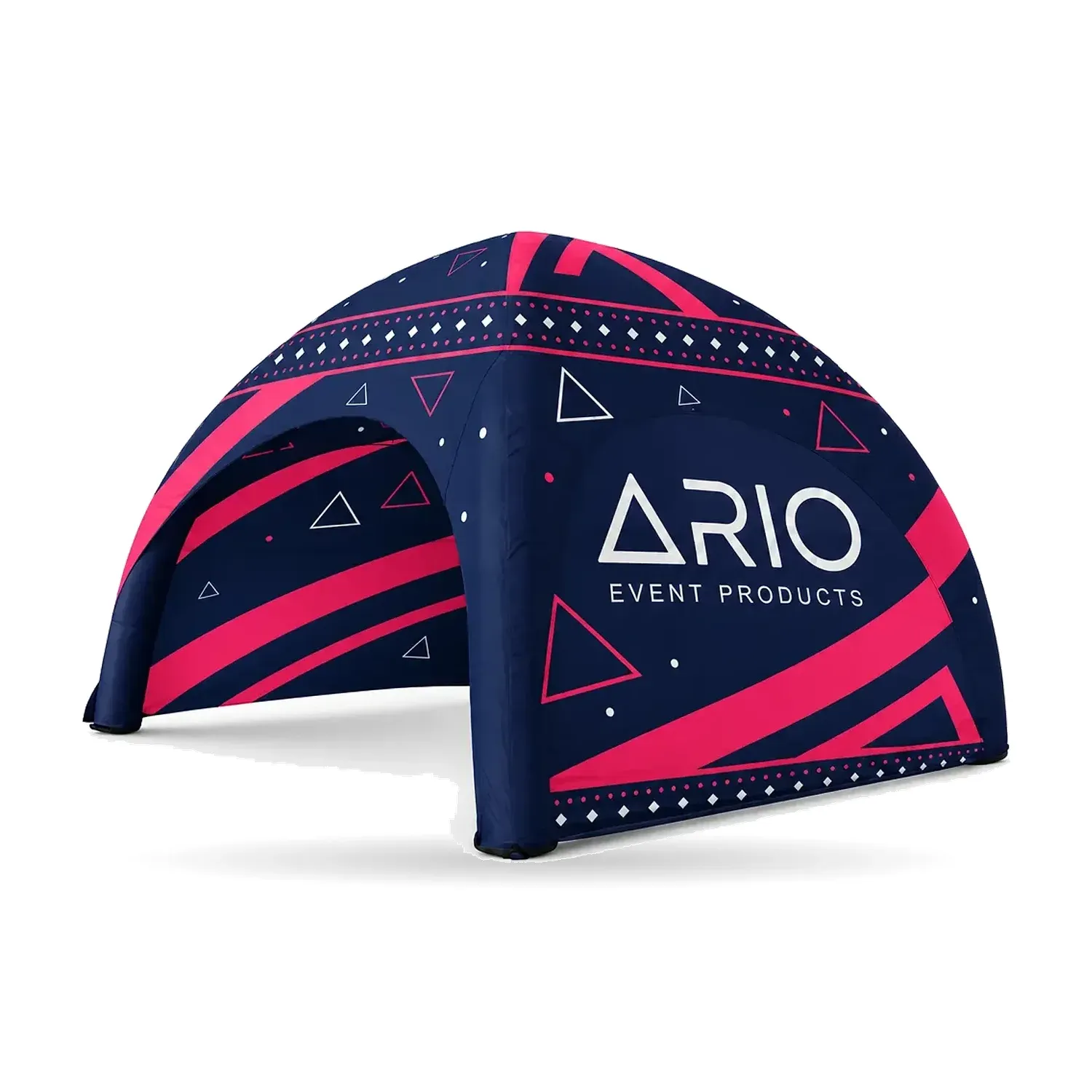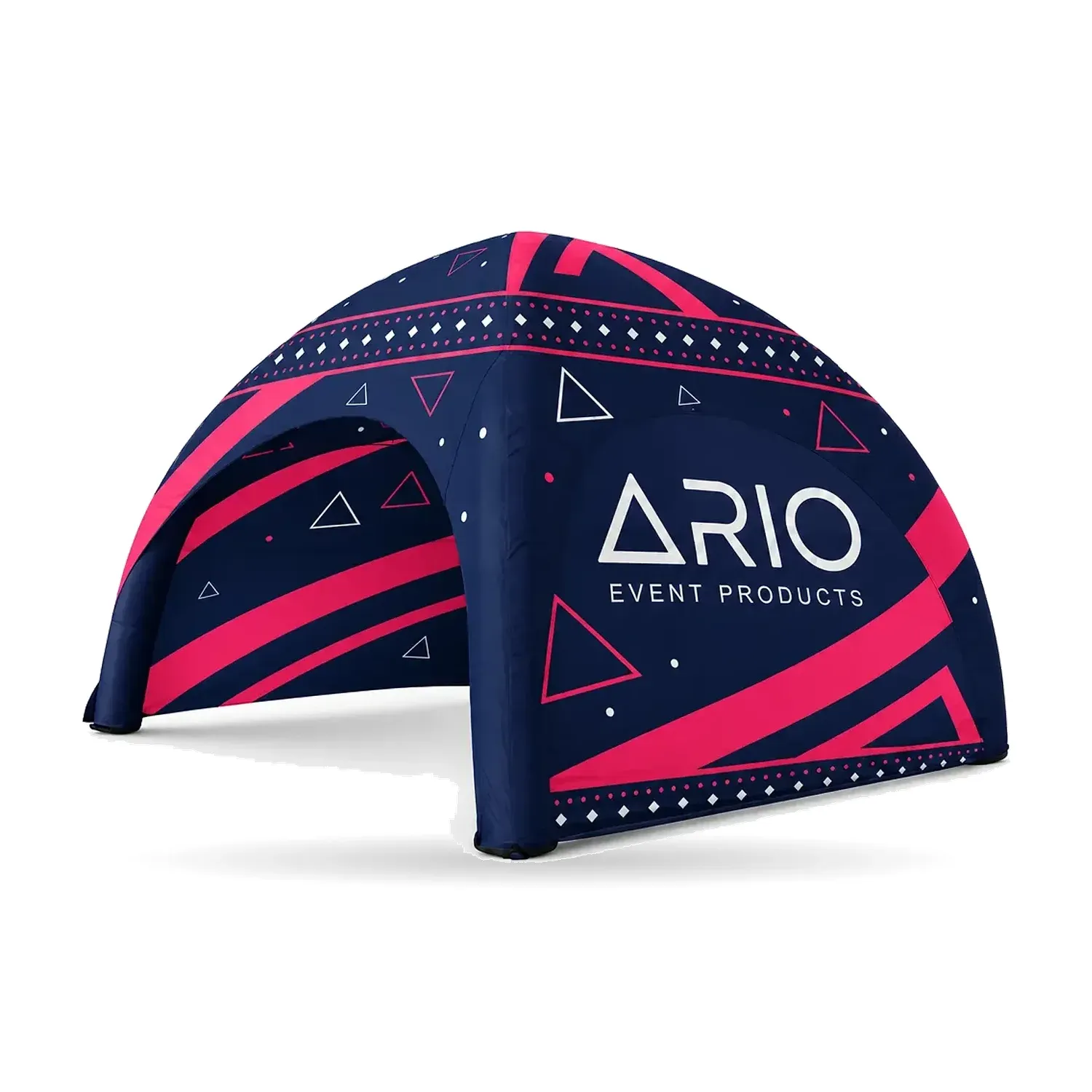
Sealed Air Tent 4x4m
Price on request
Displays and flags
All: displays and flags →Selected models
The fabric determines whether a tent survives rain and frost, how much it weighs in transport and which technique can be used to print your logo. You will find the fabrics used across all ARIO inflatable advertising products in the table below.
The standard for promotional tents is PVC-coated polyester fabric. The polyester provides tensile strength, while the PVC coating turns it into a sealed, smooth surface that keeps water out and takes print well.
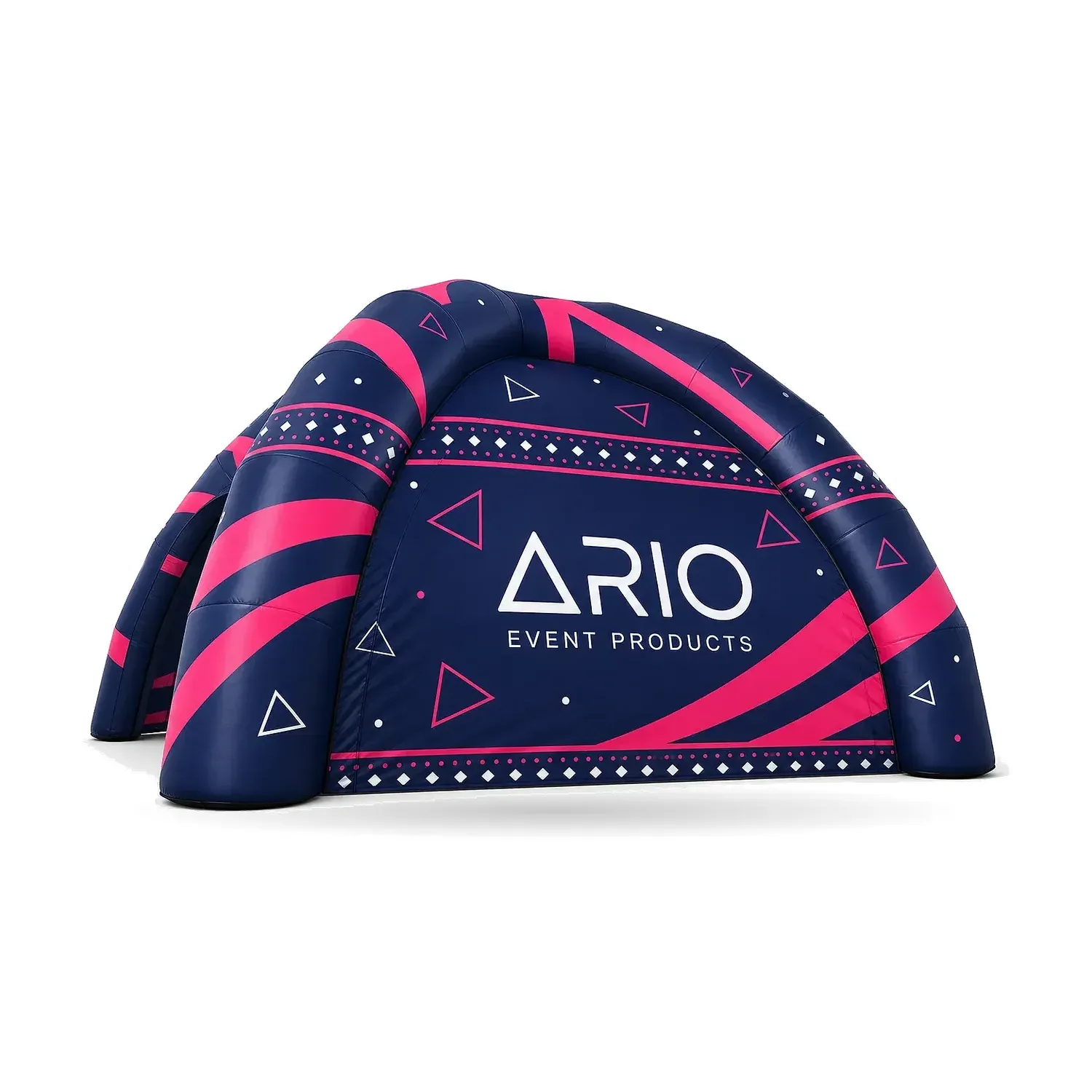
All our tents are built this way. The Sealed Air Tent 4x4m has an outer shell of 320 g/m² PVC-coated polyester and a 300 g/m² polyurethane bladder. The Inflatable Tent 4x4m uses the same 320 g/m² fabric for its shell, but instead of a bladder it runs on a built-in blower.
Each product uses a fabric chosen for its job. Summary from the ARIO product pages:
Product | Material | Fabric weight |
|---|---|---|
shell: PVC-coated polyester; bladder: airtight polyurethane | 320 g/m² and 300 g/m² | |
PVC-coated polyester | 320 g/m² | |
PVC-coated polyester | 320 g/m² | |
Inflatable arches, columns, Airwall screen frame | coated polyester | 300 g/m² |
outside PVC-coated polyester, inside polyurethane | 300 g/m² and 200 g/m² | |
polyurethane fabric (air or helium, 14.1 m³) | 200 g/m² | |
air dancers | lightweight coated polyester fabric | 80 g/m² |
Heavy coated fabrics are used where the structure stands outdoors and carries print over a large surface. Lightweight fabrics are used where the product is meant to move, as with air dancers.
Because it combines three properties an event tent needs: it is resistant to water, UV radiation and sub-zero temperatures. This means the same tent can handle a harvest festival in August and a Christmas market in December. The seams are additionally sealed so they do not leak.
The second advantage is the surface. A smooth, continuous PVC coating is the ideal substrate for UV printing, so graphics can cover the roof, walls and legs of the tent.
The polyurethane bladder (300 g/m²) is an airtight inner tube inside the tent's beams. It is inflated once before set-up, and the tent holds its shape without power or a running blower for around 7 days. The PVC-coated polyester shell protects the bladder from damage and carries the print.
That is why a sealed air tent is the choice for meadows, rallies, ski slopes and beaches, where there is no socket. An inflatable tent works differently: the blower constantly tops up the air, so it does not need an airtight bladder, but it does need a 230 V power supply. In return, it allows larger and more unusual shapes, such as a 5-leg tent with an 8 m diameter.
Fabric weight is the mass of one square metre of fabric. A higher figure usually means a thicker coating and better abrasion resistance, but also a heavier tent to transport. For promotional tents, 300 to 320 g/m² is the balance between durability and convenience: a folded 4x4 m tent fits in its carry bag and in the boot of a car.
The number alone does not tell the whole story. When comparing offers, also ask about the type of coating, whether a sealed air tent has a separate airtight bladder, and how the seams are finished.
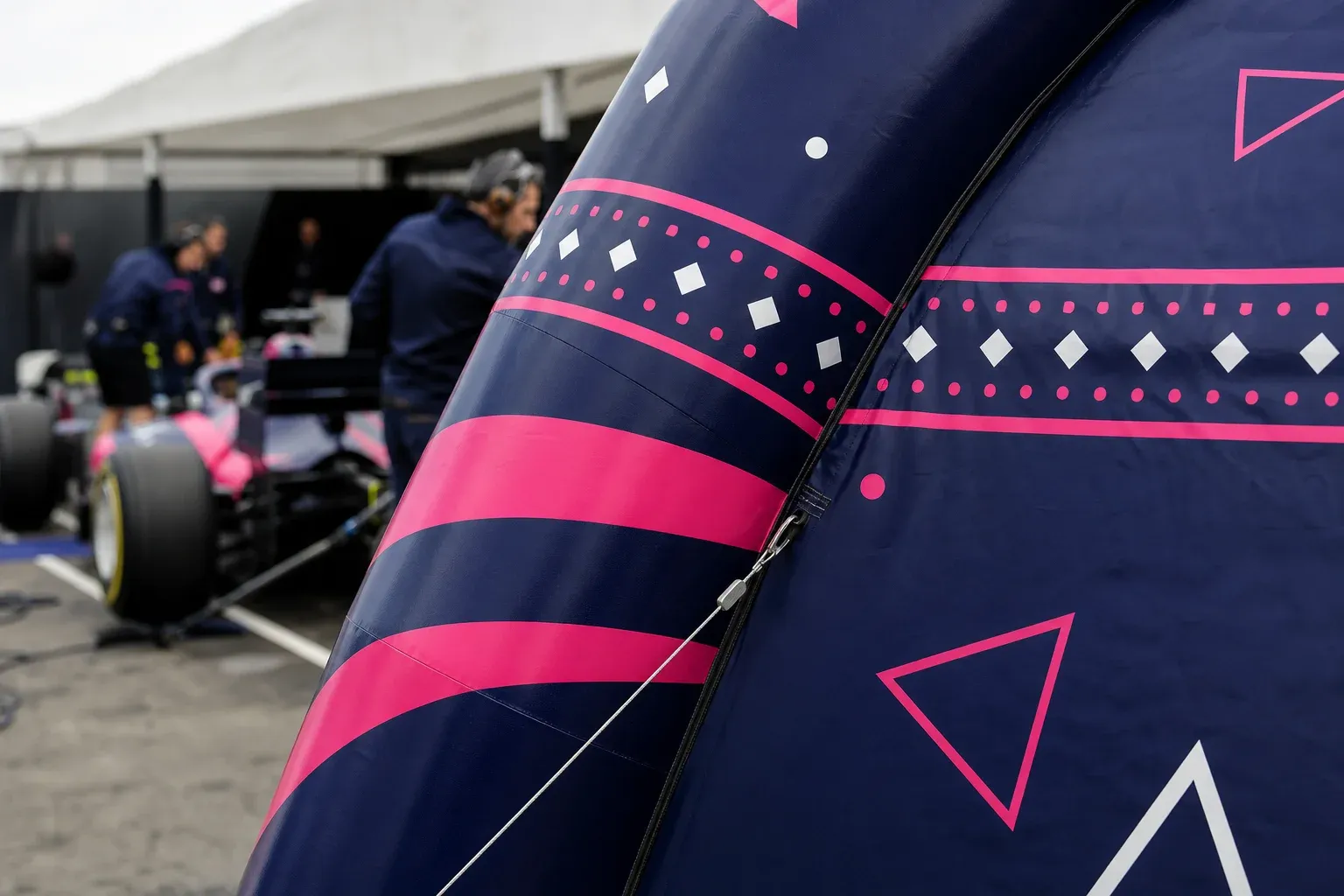
Example set-up (visualisation): PVC-coated fabric with UV print on the leg of an inflatable tent in a race paddock.
On PVC-coated fabrics we print using UV only. The reason is physical: sublimation requires 190 to 215°C (the press holds the fabric at 204°C for 35 to 40 seconds), while PVC softens at around 80°C and starts to degrade at 150 to 180°C.
In UV printing, the ink stays on the surface and cures under a lamp in a fraction of a second. This gives several practical benefits:
Lightweight fabrics without a thick coating, as used in air dancers, are printed by sublimation: the dye penetrates the fibre and the fabric stays soft and moves freely in the wind. For a detailed comparison of both techniques, see the guide UV printing or dye sublimation.
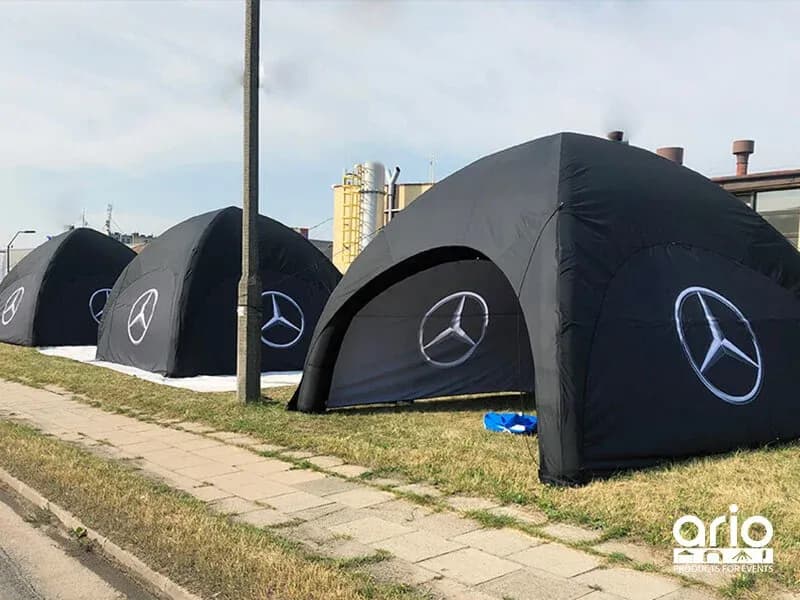
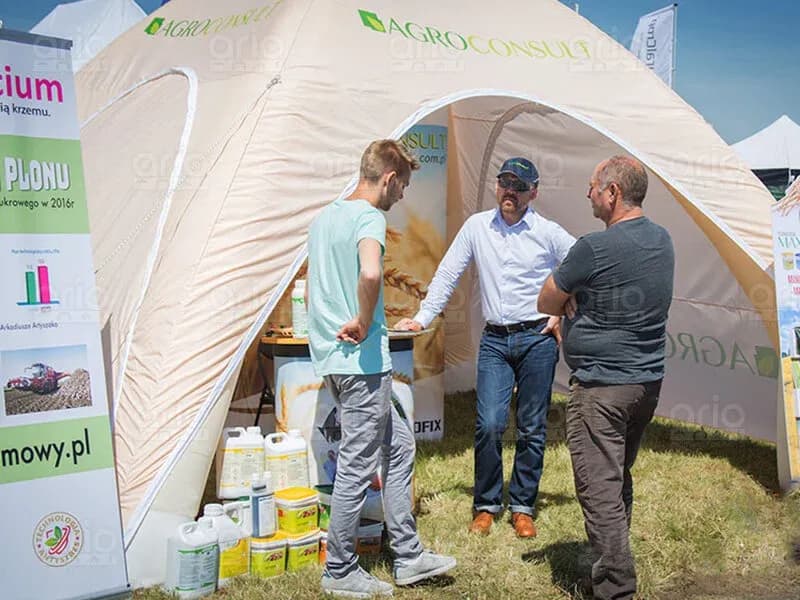
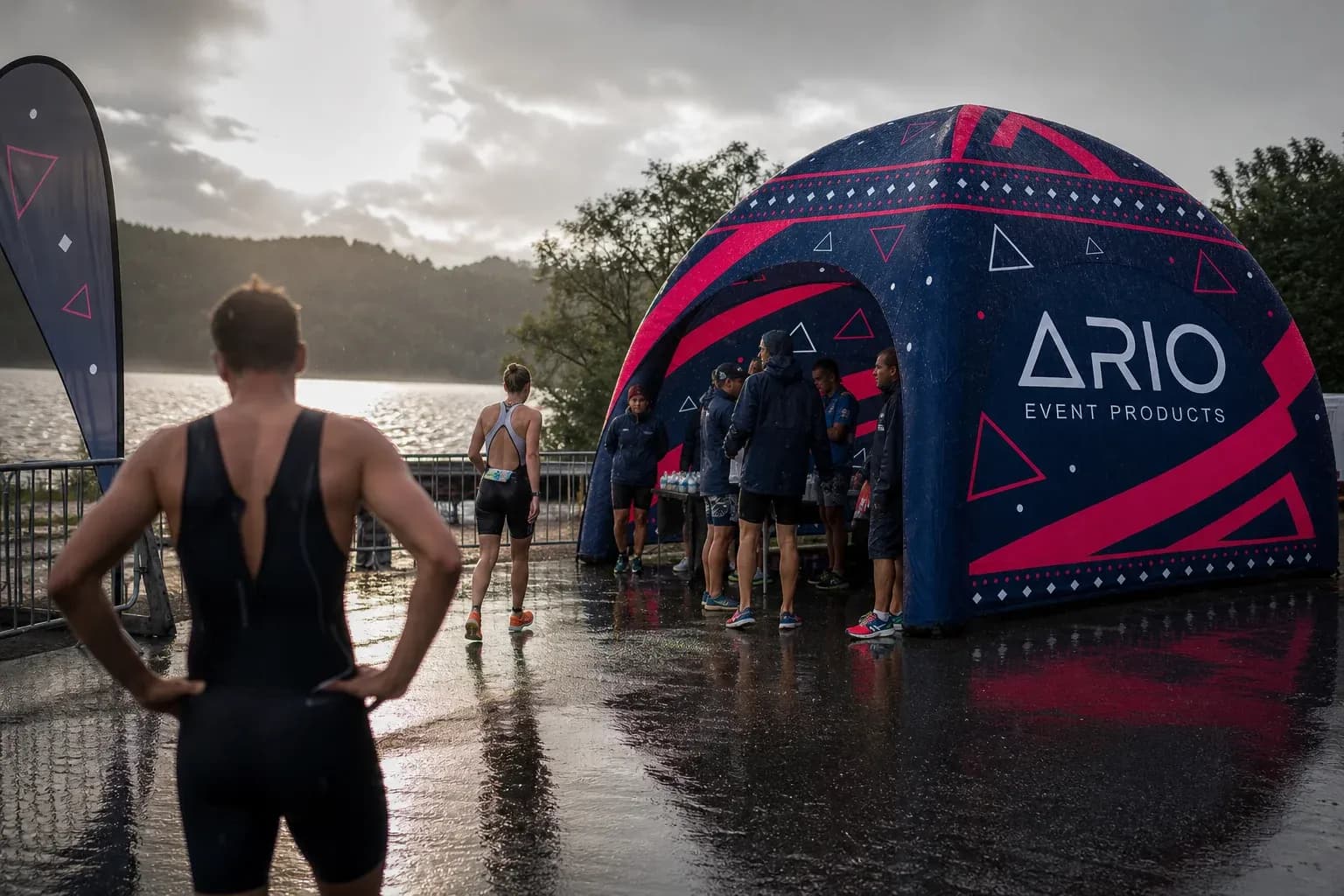
Two examples from our projects:
Dry the tent before packing it, fold it and keep it in its carry bag in a dry room. Do the same after every event in the rain: a tent packed wet must be unfolded and dried as soon as you get back.
ARIO tents are made at our own factory in Poland: we sew, print and test them in-house. Production with full print takes 10 working days from design approval and receipt of payment, and we prepare the artwork free of charge. See how our tents perform at events, or contact us with your date and logo.