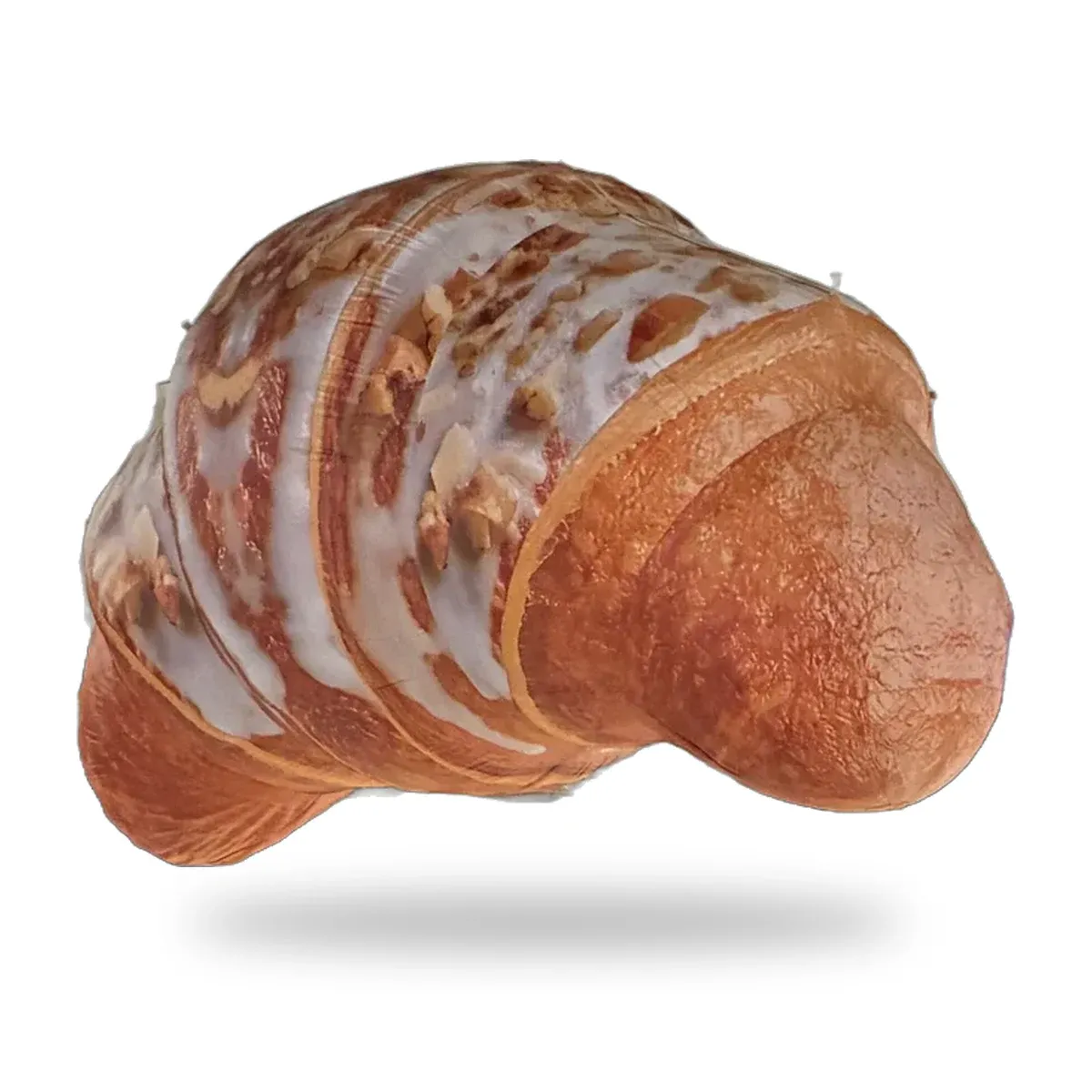
Hanging sealed-air figure 5 m with print (e.g. croissant, pastry, product)
Price on request
Displays and flags
All: displays and flags →Selected models
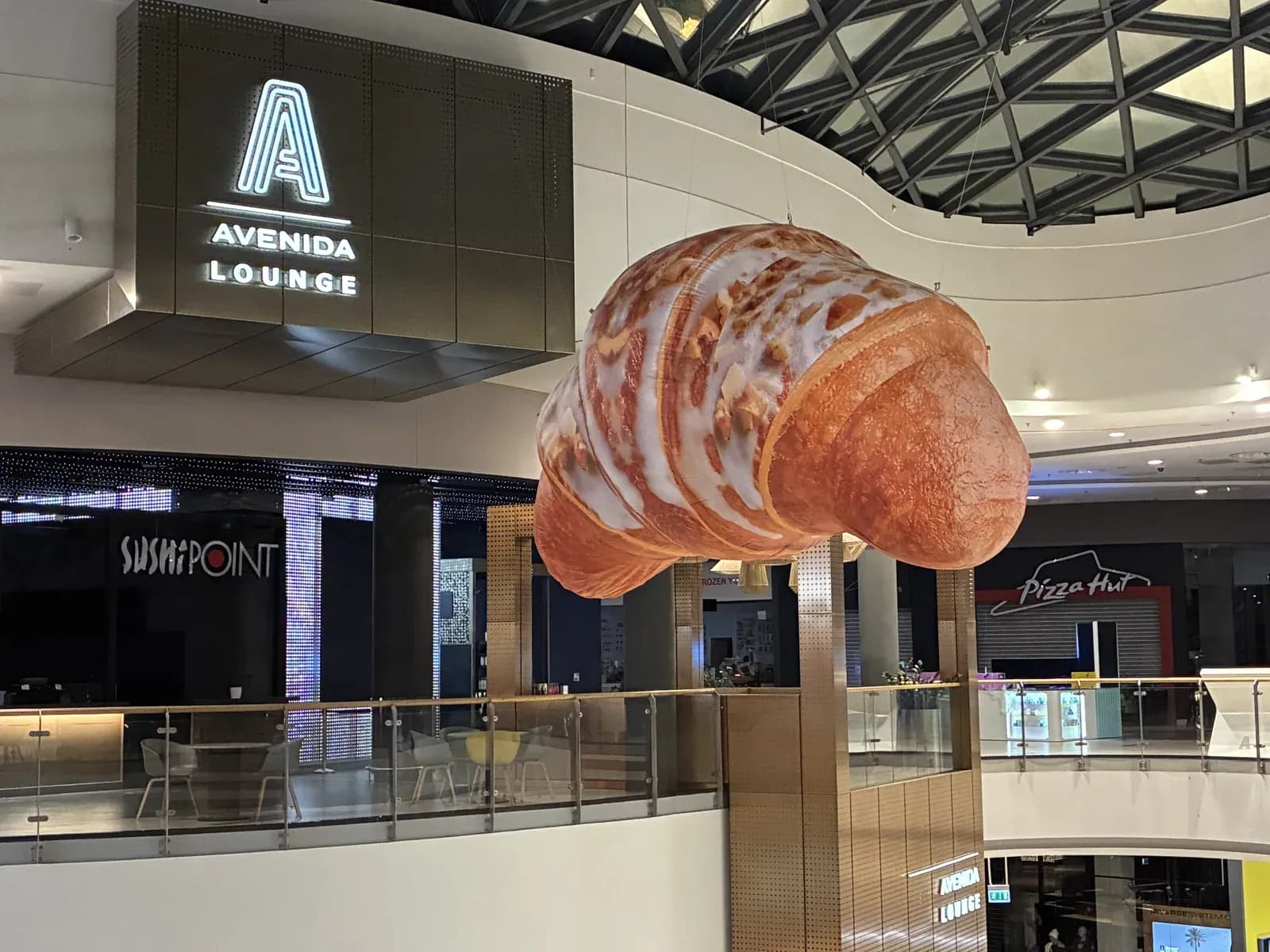
The St. Martin's croissant with a span of around 5 metres is a sealed-air inflatable figure that ARIO designed and produced to hang from the ceiling of the Avenida shopping centre in Poznań. Below we walk through the whole journey: from the client's enquiry, through rigging points for the rope-access team and the 3D model, to the airtight polyurethane bladder and installation above the atrium.
It is an example of what we do in our advertising figures for brands range: instead of a logo on a flat banner, the client gets their product at a scale nobody can miss. In place of the croissant there could be any other pastry, bottle, package or mascot.
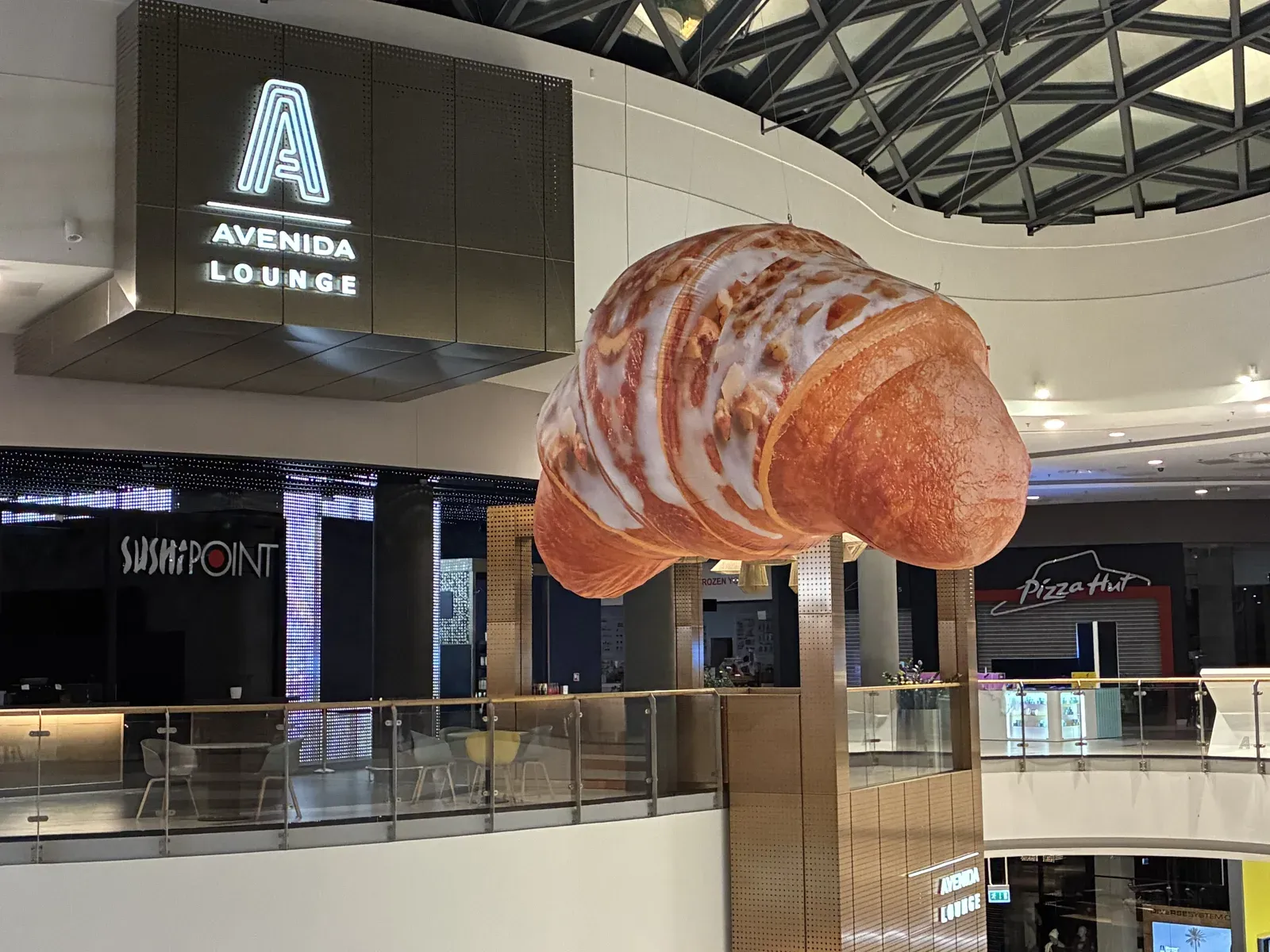
The order started with a short enquiry listing six requirements, which set the direction for the whole project straight away. The client needed a croissant that would be visible from every level of the mall during the St. Martin's Day season, while staying safe above visitors' heads.
Requirement from the enquiry | What it meant for the design |
|---|---|
Shape: a custom 3D croissant with layers, folds and icing | A full 3D model and a pattern made of many panels instead of a simple sphere |
Span of approx. 5 m | Choosing the number of segments and cross-sections so the shape holds in the air |
Indoor display, hung from the ceiling | A lightweight build, with rigging points planned on the model from the start |
Sealed-air technology, no continuous blower | An airtight polyurethane bladder inside, with no cable and no fan noise above the atrium |
Heat-welded, reinforced eyelets for hanging and levelling | Rigging points welded into the outer skin at positions calculated on the model |
Full CMYK print over the entire surface | Photographic print of the dough, icing and crumble topping on every panel |
The client's first question was how many hanging points were needed as a minimum. The answer depends on the shape: the croissant is longer than it is tall and has heavy ends, so the points have to spread the weight along its whole length, not just at the centre. In this project the number of fixing points was calculated to ensure a secure and safe installation of the figure.
A sealed-air figure is inflated once and keeps its shape without power, which is why it is suitable for hanging from a ceiling. Under the roof of a mall there is nowhere to safely run a cable to a fan, and its noise above the atrium would disturb shoppers.
The croissant has a double-skin construction, just like our sealed-air advertising balls: inside, a transparent, airtight polyurethane bladder that holds the air; outside, a printed cover that gives the shape and the look. We also compare the two technologies on our sealed-air tents page.
| Sealed-air figure (like the croissant) | Inflatable figure with a blower |
|---|---|---|
Power supply | not needed once inflated | 230 V blower for the whole display period |
Hanging from the ceiling | yes, with no cable | difficult, needs power at height |
Noise | none | fan noise |
Best use | shopping centres, halls, long-term displays | outdoors, short events |
We planned the hanging points on the 3D model before the first pattern was cut. The croissant hangs above the atrium and the escalators, so it was installed by industrial rope-access technicians, and the figure had to be hung and levelled without any trial and error on site.
The rigging eyelets are heat-welded into the outer skin and reinforced, so the load from the rope spreads over a larger area of material rather than onto a single seam. Their placement follows the centre of gravity of the shape: the croissant is meant to hang level, with its curve facing the main view from the mall.
The 3D model of the croissant was prepared by our experienced graphic designer in dedicated 3D modelling software. Three things were developed on the model at once: the shape with its layers of dough, the split into panels for sewing and welding, and the print layout, meaning where the icing goes and where the golden-baked edges go.
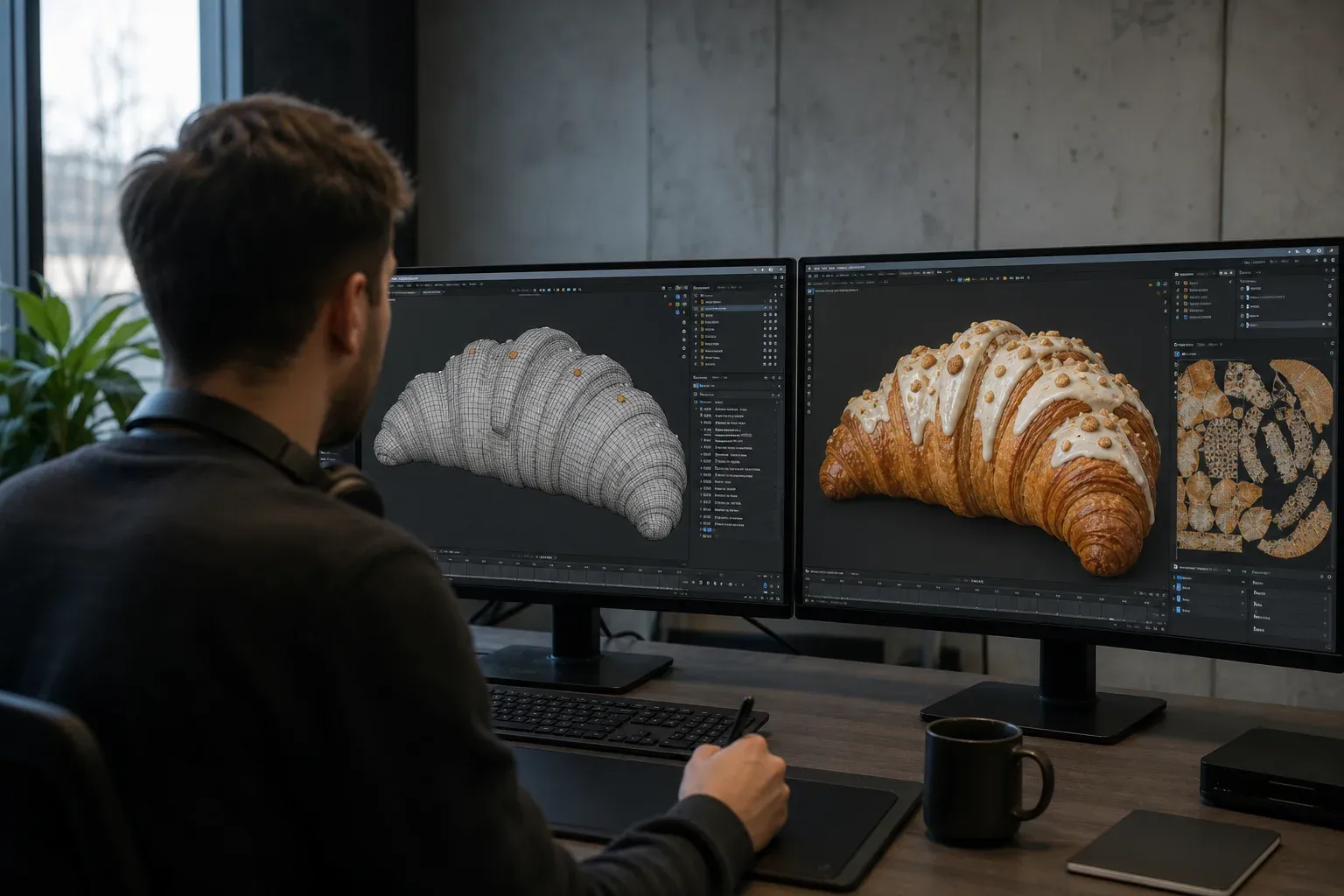
At this stage the client receives a visualisation for approval. Production starts only once the design is approved, and the whole process takes 10 working days from design approval and payment being booked.
Production starts with the bladder, because it determines how airtight the whole figure is. We heat-weld the transparent polyurethane bladder from cut panels, then inflate it and check that it holds both the air and the croissant shape.
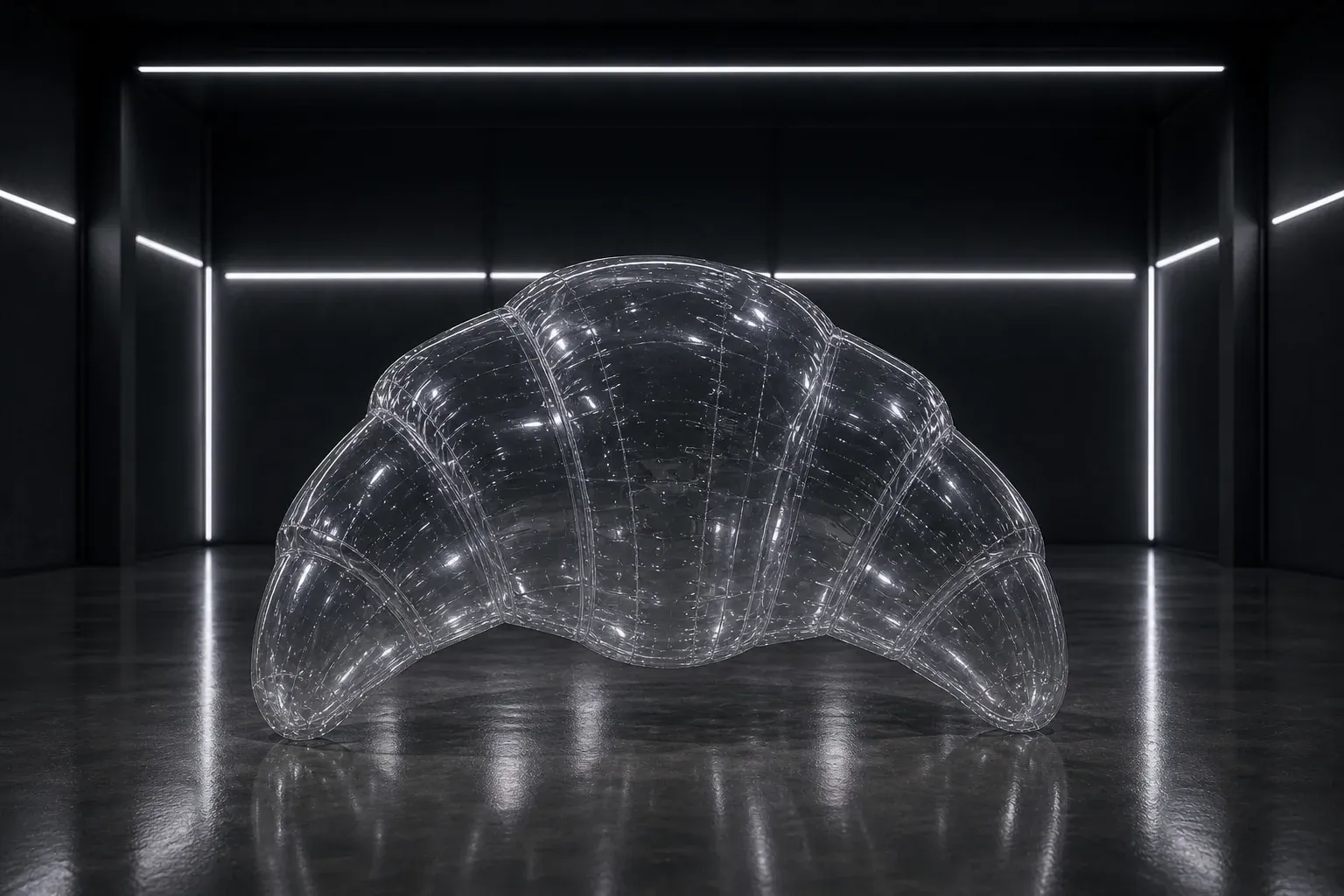
The second layer is the cover with full print. The print covers the entire surface, so the croissant looks like a real pastry from every side: from above, from the side and from below, which is how most people in the mall see it. We cover printing techniques in more detail in our guide UV print or sublimation.
On site, the croissant was hung under the glass roof of Avenida, above the atrium, the escalators and a promotional zone with sweet treats. With a span of around 5 metres it can be seen from the mezzanine, from the ground floor and from the escalators on the way up.
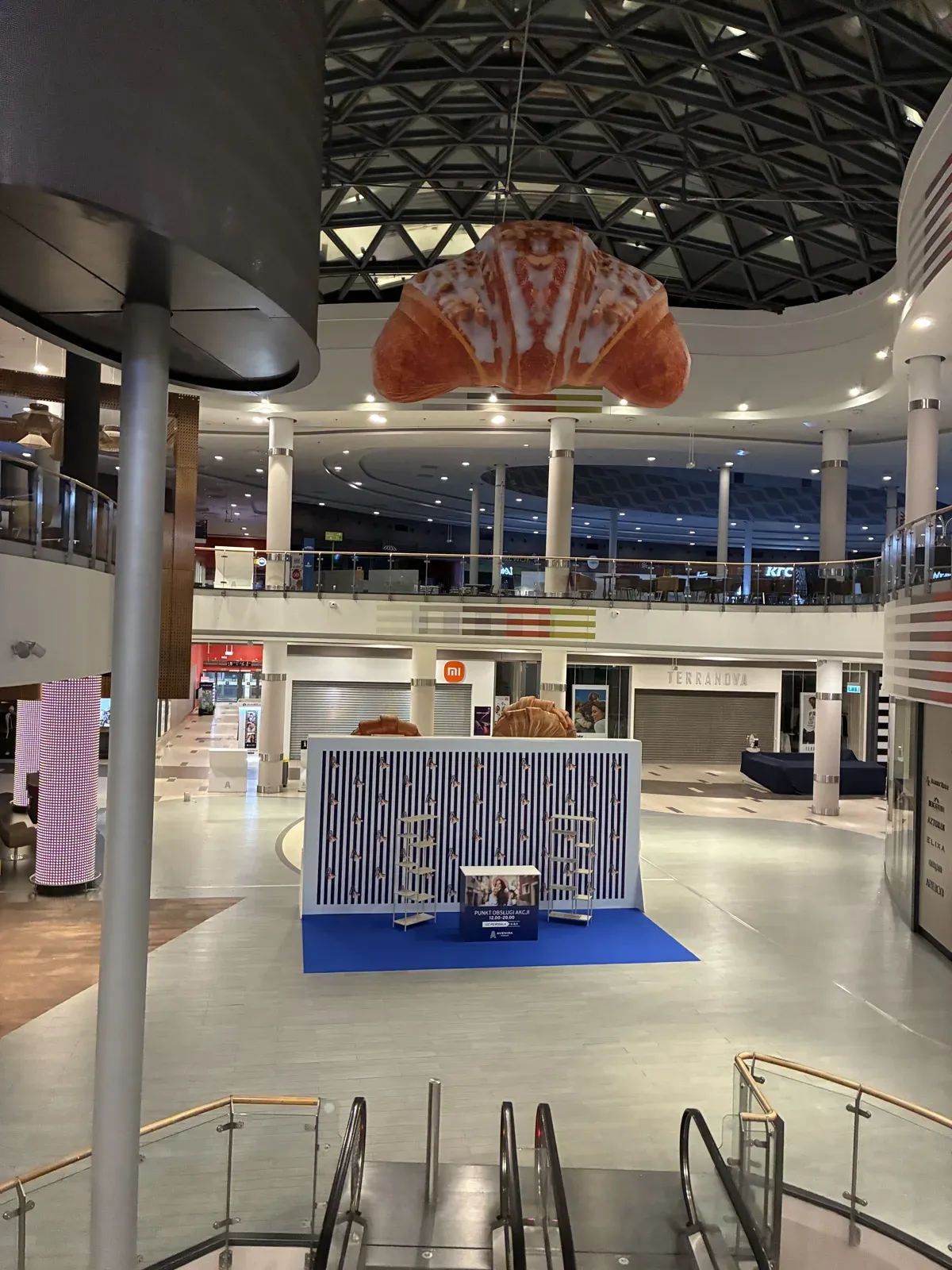
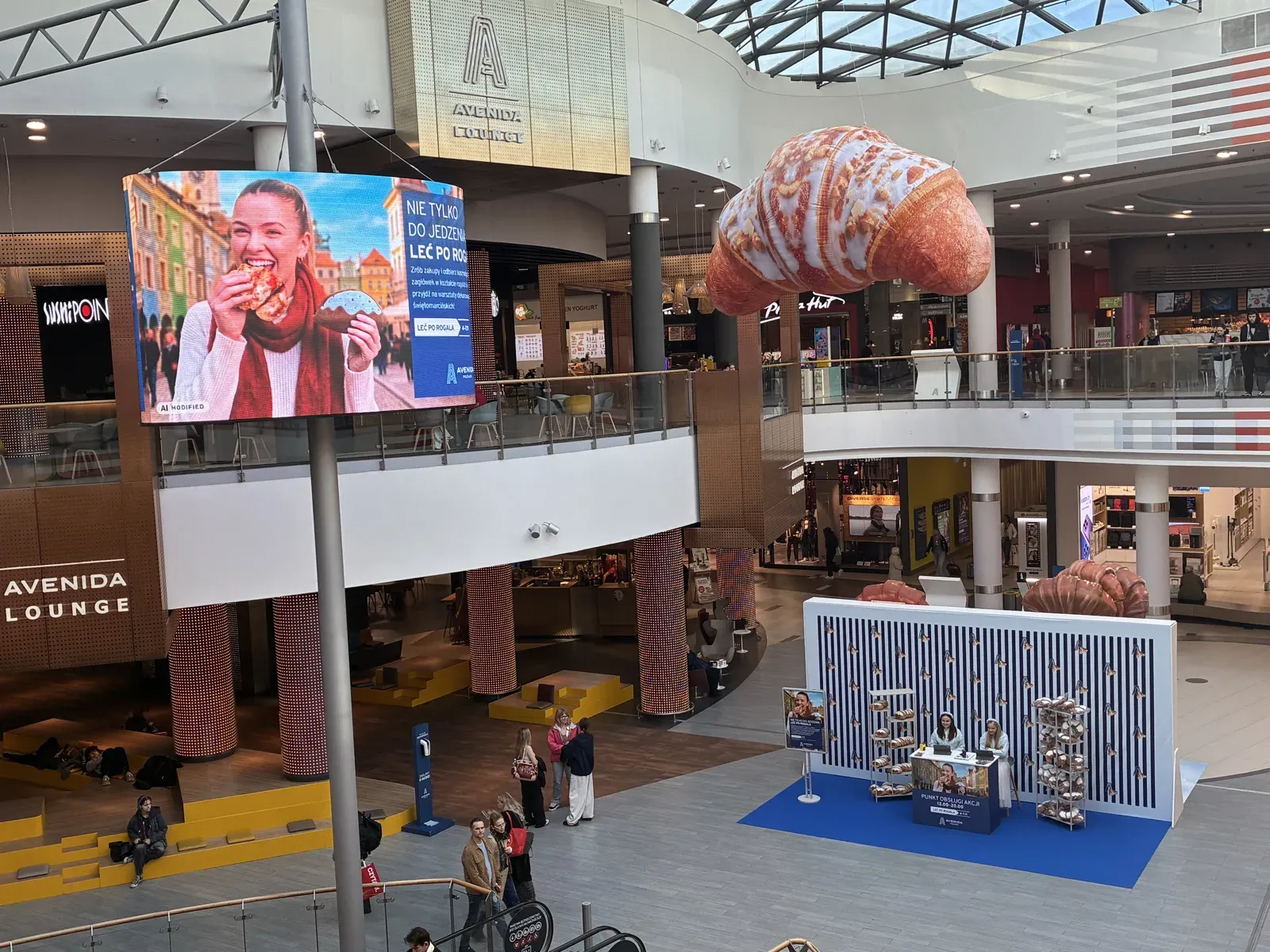
Yes. The croissant is one of many shapes we produce with this technology: it could be any pastry, bottle, can, package, mascot or 3D logo. We show similar figures in our projects Energizer inflatable figure and illuminated decorative sphere above the dance floor.
You will find indicative prices for other forms in our guide how much does inflatable advertising cost, and our full range on the inflatable advertising page. If you have an idea for your own figure, send us a photo of your product or logo and we will prepare a quote with a visualisation within 24 hours on working days.